
Traffic Run!: Driving Game
Geisha Tokyo, Inc.Action
4.017.33K Reviews
- Version
- 3.0.10
- Installs
- 100.00M
- Age Rating
- Everyone
Screenshots

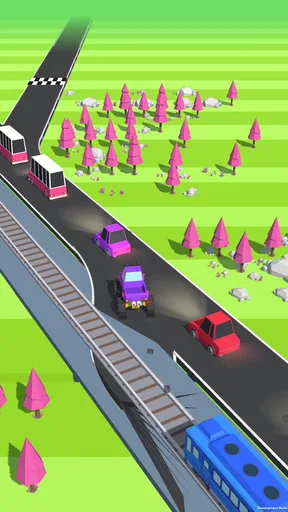
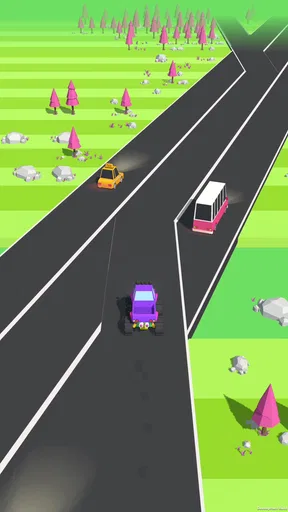
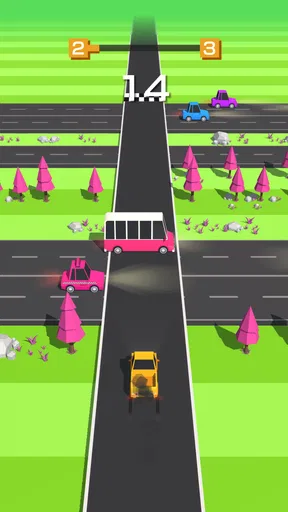
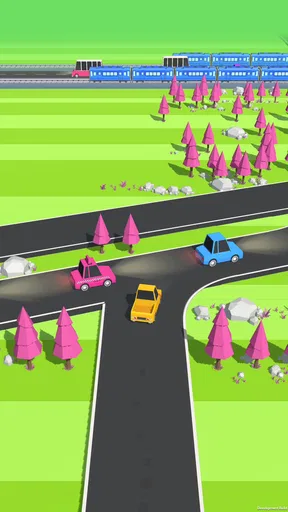
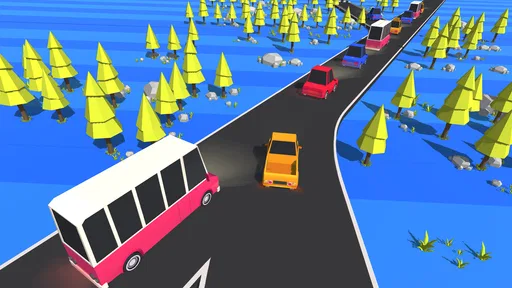

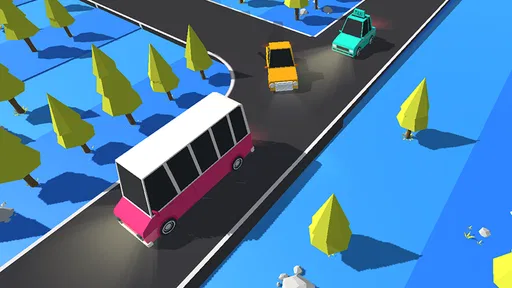
Our Review of Traffic Run!: Driving Game
 Analysis by Appyee
I first picked up Traffic Run! expecting a quick reflex game, and that is exactly where it fits best: short driving attempts that are easy to understand, quick to restart, and simple enough to pass around on a shared phone. The basic challenge is to move through traffic without crashing, but the appeal comes from how quickly a harmless-looking run can turn into a tense decision about when to cross, slow down, or take a chance.
It is an action game from Geisha Tokyo, Inc., available free of charge for Android and iOS. The store summary is brief, but the experience is more useful than that sentence suggests when you need something for a spare minute. I would not describe it as a deep driving simulator or a long-form racing game. I see it more as a compact reflex test, particularly suitable for casual play in a household where several people may use the same device at different times.
Its broad reach is easy to understand. The game is rated Everyone, works on Android devices running version 6.0 or later, and has passed the milestone of over 100 million installs. It also holds a 4.0 average from around 286 thousand ratings, with roughly 17 thousand written reviews. Those figures do not make it automatically right for every player, but they do match my impression that the game is designed to be immediately approachable rather than demanding a long learning period.
How Traffic Run! Works in a Shared Household
I find that a shared-device session works best when everyone agrees on a simple turn rule before play begins, rather than trying to keep score through the game itself. It also helps to let the person holding the phone focus while the others watch traffic and save their advice for the next attempt, keeping the mood friendly instead of distracting.
A good fit for quick turns on one device
The most natural household use is a short-turn arrangement. One person plays while another watches, then the phone changes hands after a crash or a completed attempt. Because the central idea can be understood almost immediately, nobody needs a lengthy explanation before joining in. That matters with a mixed-age group: a younger player can try it without first learning a complicated control scheme, while an older player can still enjoy the pressure of judging moving traffic.
I found that the game works particularly well during small gaps in the day. It can fill the few minutes before leaving the house, provide a light distraction while waiting for an appointment, or become a simple pass-and-play challenge after dinner. The useful boundary is to treat it as a sequence of individual turns rather than as a shared account or a multiplayer session. The fun comes from comparing attempts and reactions, not from pretending that several people are controlling the same run.
That distinction helps avoid disappointment. If your household wants a proper two-player racing experience, this is not the right kind of game. There is no reason to approach it expecting a campaign, a structured family competition, or a detailed garage to manage. Its strength is the immediacy of one person making a driving decision, failing or succeeding, and handing the device to someone else.
Why the simple controls still create tension
The controls are easy to grasp, but the timing is not always easy to master. Traffic creates a series of visual decisions, and the safest-looking move is not necessarily the best one once vehicles begin to overlap. I quickly learned that rushing into every opening is a poor strategy. Watching the flow for a moment can be more effective than reacting to the first gap that appears.
For a shared device, that creates a useful kind of spectator involvement. Someone waiting for a turn can point out an approaching vehicle or question a risky move, although the person holding the phone still has to make the final decision. This makes the game conversational without requiring formal coordination tools. It is a small but important strength: the household can participate together even though the play itself remains individual.
My practical advice is to agree on what counts as a turn before starting. A turn could end after a crash, after a particularly successful run, or after a fixed number of attempts. The game itself does not need to manage that arrangement; the household can keep it informal. Establishing the rule first prevents the fastest player from immediately taking over the phone and keeps the experience comfortable for younger or less experienced players.
Setting boundaries before passing the phone around
Because the game is free to download but includes in-app purchases priced at $2.99 per item, I would decide in advance how purchases are handled on a shared device. That does not mean assuming that a purchase will happen, but it is sensible to keep the payment boundary clear when children or guests may use the same phone. A simple household rule—play is allowed, purchases require permission—removes an avoidable source of tension.
I also prefer to separate the idea of “my progress” from “our device.” If several people use the same installation, a run made by one person may be seen by everyone, but that does not automatically make it a fair shared record. For a friendly competition, use an agreed notebook, a message, or a spoken score rather than relying on the app to represent each household member separately. That approach is especially useful when the device has one general user profile rather than clearly separated accounts.
This is one of the less obvious trade-offs of a casual game. Its low friction makes sharing easy, but the same simplicity means that household organization happens outside the game. I would not install it expecting built-in player profiles, family scheduling, or a dedicated system for separating children’s attempts from an adult’s attempts. It is better understood as a game that can be shared socially, not as a household-management tool.
Coordinating play without turning it into a chore
In my experience, the best coordination is lightweight. A parent can let a child choose the first turn, ask each player to call out a goal before starting, or use the game as a brief break rather than an open-ended activity. For example, a child might try to make one careful crossing while an adult focuses on patience instead of speed. The point is not to create a formal lesson; it is to give the short session a clear shape.
That approach also makes the game easier to stop. Since each attempt is naturally divided by crashes and restarts, it is simpler to say “one more run” than it would be with a game that constantly pushes a long mission forward. Still, I would not assume that a natural stopping point is enough for every child. If your household needs firm device limits, set those limits separately rather than expecting the game to enforce them.
For siblings, I would avoid comparing only the highest result. A player who takes safer opportunities may be making better decisions than someone who happens to survive a daring move. Praising observation and patience keeps the game from becoming frustrating for the person who is still learning. It also reflects the actual skill involved: success depends less on knowing a complex system and more on reading traffic and choosing a moment.
Age context and trust
The Everyone rating makes the game a plausible choice for a broad household audience, particularly because the central activity is cartoon-like traffic avoidance rather than a mature action scenario. Even so, an age label is not a substitute for knowing the child using the device. Some players may find repeated crashes amusing, while others may become irritated when a promising run ends suddenly.
I would introduce it to a younger player by demonstrating one attempt and explaining that crashing is part of the loop, not a serious consequence. That small explanation changes the mood. Instead of treating every failed run as evidence that the game is unfair, the player can see it as a chance to notice what happened and try a different timing choice. The game is most enjoyable when failure remains brief and emotionally manageable.
Trust also matters around the device itself. If a child is borrowing an adult’s phone, make sure everyone knows whether the session is only for play and whether purchases are off limits. If an older sibling is supervising, that person should not quietly change the rules or claim every successful attempt. These are ordinary household agreements, but they matter more here because the game is so easy to pass around.
I would skip it for a child who needs a calm, low-pressure activity or who dislikes sudden failure. I would also look elsewhere if the goal is a cooperative game in which children must communicate to solve a shared problem. Traffic Run! can encourage conversation, but the underlying interaction remains a personal reflex challenge. That difference is important when choosing between a quick arcade title and a genuinely collaborative alternative.
What makes it different from other driving games
Compared with a conventional racing game, this one asks for less commitment. There is no need to learn a track layout, tune a vehicle, understand a long upgrade path, or reserve a substantial block of time. That makes it more convenient for a shared phone and more accessible to someone who does not normally play driving games.
The trade-off is depth. A full racing game usually offers more control, more meaningful vehicle choice, and a stronger sense of progression. A driving simulator offers realism and precision that this experience is not trying to provide. Even another arcade racer may be a better choice if you want sustained competition, varied modes, or a clear sense of building toward a larger goal.
Where this game wins is in the decision-to-action cycle. I can open it, understand the immediate objective, make a few traffic judgments, and stop without feeling that I abandoned a complicated session. That is valuable on a household device, where the next person may need the phone at any moment. The game respects short attention windows better than many larger alternatives, although players who want lasting variety may eventually find the repeated structure limited.
Practical advice for a smoother shared experience
Use the first few attempts as observation rather than competition. Watch how traffic moves, identify whether the player tends to rush, and encourage waiting for a clearer opportunity. This simple adjustment is more useful than giving constant instructions, because too much commentary can distract the person controlling the phone.
If several people are taking turns, keep the device in the same orientation and brightness setting for everyone. That sounds minor, but consistency makes comparisons fairer and prevents a younger player from being disadvantaged by a hurried handoff. Clean the screen before a group session as well; a game built around quick visual reactions becomes less comfortable when fingerprints obscure the action.
For adults sharing with children, I would keep the purchase rule visible in the conversation and avoid describing optional spending as part of winning. The game is perfectly usable as a free experience, so there is no need to make a purchase the focus of a family session. If someone enjoys it enough to consider spending, that can be a separate decision made by the device owner.
Another useful habit is to rotate who starts and who watches. The watcher can learn the traffic rhythm, while the player gets uninterrupted concentration. Then switch roles. This gives the session a cooperative feeling without claiming that the app offers cooperative controls. It also helps a hesitant player build confidence before being judged on a result.
Technical fit and everyday expectations
The current version is 3.0.10, and the Android requirement of version 6.0 or later means it can suit some older devices as well as newer ones. I would still judge the experience on the actual phone being shared: screen size, touch responsiveness, and battery condition can affect a reflex game more than the age of the operating system alone. A device that registers taps inconsistently can make the game feel unfair even when the problem is hardware.
Because the title is free, it is easy to try without making a financial commitment. The presence of item purchases means I would not hand it to a child on a shared payment-enabled device without first agreeing on the household rule. That is not a reason to reject the game, but it is a reason to treat installation and access as two separate decisions.
The age rating and approachable premise make it easy to place in a family setting, but the game should still be used with ordinary judgment. It is not a substitute for supervision, device boundaries, or account awareness. A shared phone can blur who is playing and who is responsible for a purchase, so the adults in the household should keep those responsibilities clear.
Who should choose it—and who should skip it
I would recommend it to someone who wants a compact action game with immediate driving decisions, especially if the app will be passed between family members or friends. It is also a good choice for a player who likes testing reaction time but does not want a long tutorial or an involved racing career. The free entry point makes experimentation easy, and the Everyone rating broadens its household appeal.
I would be more cautious for players who need deep progression, realistic driving physics, or reliable long-term variety. The repeated traffic-avoidance format can become familiar, and its simplicity is both the reason it is accessible and the reason it may not satisfy a dedicated racing fan. If your main goal is shared cooperation, choose a game built around joint controls or team objectives instead.
For a family, I think the decisive question is not whether every person will play for hours. It is whether the household wants a low-commitment game that can create a few minutes of conversation without requiring separate equipment or complicated rules. If the answer is yes, this is a sensible candidate. If you need detailed account boundaries or built-in parental organization, you should look for those capabilities elsewhere rather than assuming this title provides them.
My household verdict
After using it as a quick solo game and imagining it in a shared-device routine, I see Traffic Run! as a friendly, narrow experience that knows what it wants to be. It turns ordinary traffic into a series of fast choices, and that makes even a short session feel active. The game does not need a complicated explanation, which is a real advantage when different ages and gaming habits meet around one phone.
Its limitations are equally clear. It is not a substitute for a full racing game, it does not create a formal family competition by itself, and the shared-device experience depends on household agreements about turns, purchases, and stopping. Players who want depth may outgrow the format, while players who dislike sudden failure may find the repeated crashes discouraging.
My final recommendation is positive but specific: try it as a short, pass-and-play driving game, not as a complete racing platform. I would happily keep it available for waiting rooms, quick breaks, or a casual family challenge, provided everyone understands that the fun comes from timing and friendly comparison. For that purpose, its free access, broad age suitability, and straightforward action make it an easy game to share.
Verdict
Strengths of Traffic Run!: Driving Game
- Simple one-touch controls are easy for players of all ages.
- Quick levels make it convenient for short gaming sessions.
- Colorful visuals and lively traffic create an appealing arcade style.
- Unlockable cars provide a small sense of progression.
- Offline play is useful when you have no internet connection.
Limitations of Traffic Run!: Driving Game
- Frequent advertisements can interrupt the gameplay experience.
- The core mechanics may feel repetitive after extended play.
- Some vehicles and rewards require considerable time to unlock.
- Limited strategic depth may disappoint experienced racing fans.
- Accidental taps can cause crashes, especially on smaller screens.
Other Releases by Geisha Tokyo, Inc.
View All
AmaZeus: Merge & Shoot
Role Playing4.2
Similar Picks in This Category
View All
Temple Run 2: Endless Escape
Imangi Studios4.1

PUBG MOBILE
Level Infinite4.3

Free Fire: 9th Anniversary
GARENA INTERNATIONAL I4.4

Talking Tom: Hero Dash Run
Outfit7 Limited4.3

slither.io
Lowtech Studios3.9

Sniper 3D:Gun Shooting Games
Wildlife Studios4.6
Frequently Asked Questions
What is Traffic Run!: Driving Game?
Traffic Run!: Driving Game is a casual arcade game focused on timing, quick reactions, and simple one-touch driving. You guide a vehicle through busy roads, cross traffic safely, and try to reach the finish line without crashing. Its controls are easy to understand, making it suitable for short play sessions, although later stages become more demanding as traffic patterns and obstacles require faster decisions.
How do you play Traffic Run!: Driving Game?
The main gameplay is based on controlling when your car moves and when it stops. You need to watch approaching vehicles, find safe gaps, and cross the road at the right moment. Releasing or pressing the control at the wrong time can lead to a collision. The mechanics are intentionally simple, but successful runs depend on patience, observation, and accurate timing rather than complicated controls.
Is Traffic Run!: Driving Game free to download and play?
Traffic Run!: Driving Game can generally be downloaded and played for free, but the experience may include advertising and optional in-app purchases, depending on the version and platform. Ads can appear between attempts or levels, while purchases may offer ways to remove advertising or unlock additional content. Before downloading, it is worth checking the current store listing for pricing, permissions, and purchase details.
Can Traffic Run!: Driving Game be played offline?
The core driving challenges may be playable without a constant internet connection, which makes the game convenient for commuting, travel, or quick offline entertainment. However, certain features can depend on connectivity, including advertisements, store content, synchronization, updates, or promotional elements. Availability may also vary between Android and iOS versions, so testing the game in airplane mode is the best way to confirm its offline behavior.
Is Traffic Run!: Driving Game suitable for children?
Traffic Run!: Driving Game is easy for children to understand because it uses colorful visuals and straightforward controls, and it does not require advanced reading or gaming experience. Nevertheless, parents should review the app-store age rating and advertising information before installation. If the game includes optional purchases or frequent ads, parental controls may be useful, particularly when the device is shared with younger players.
Play our best games!


